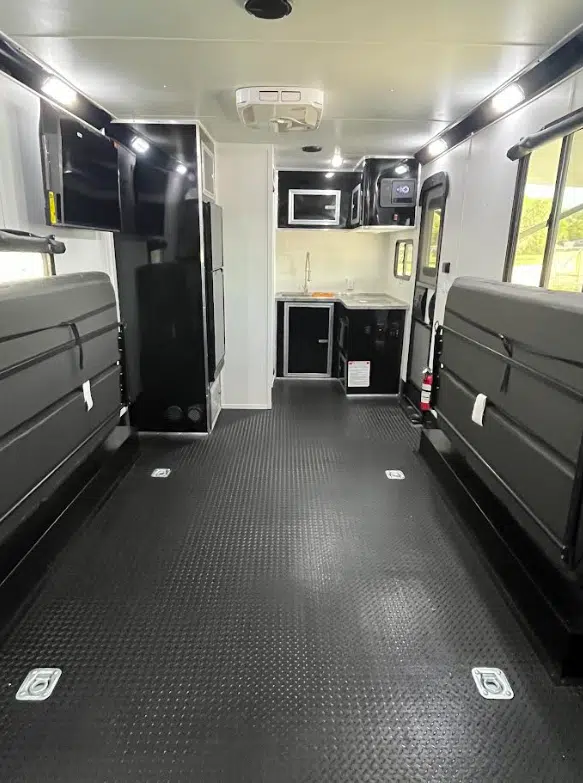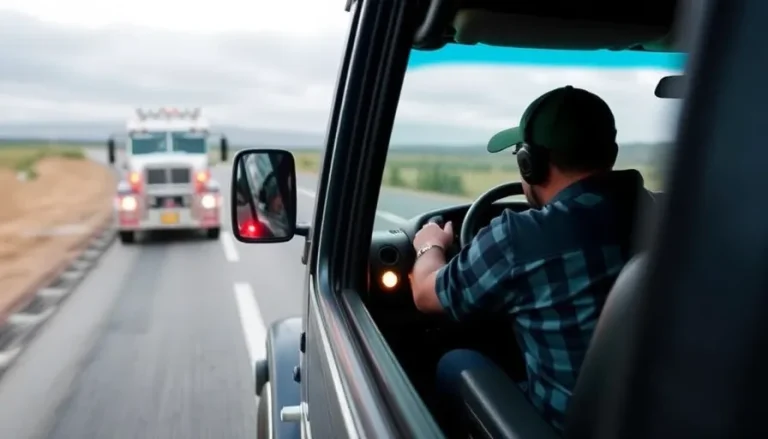


Towing a gooseneck trailer with living quarters involves more than simply hitching up and hitting the road. These trailers add weight, height, and complexity, which means safe towing depends on proper preparation, equipment, and driving habits.
In this guide, we’ll cover how to properly use gooseneck trailer safety chains, the trailer safety equipment every hauler should carry, and practical towing tips that help prevent the most common towing problems.
Why Living-Quarters Goosenecks Require Extra Safety Planning
Compared to standard utility or flatbed trailers, living-quarters gooseneck trailers introduce additional weight and systems that affect towing stability and safety.
A gooseneck trailer with living quarters typically adds:
- More overall trailer weight
- Higher pin (tongue) weight transferred into the truck bed
- A larger side profile that increases crosswind impact
- Additional onboard systems such as propane, electrical, and water
Because of these factors, towing a living-quarters trailer requires extra attention to weight balance, braking performance, and secure connections. Minor oversights that might not matter with a lighter trailer can quickly become safety risks with a larger living-quarters setup, making additional planning a must.
Pre-Tow Checklist (Do This Every Time)
Most towing incidents start with something small that was overlooked. A consistent pre-tow inspection helps prevent those problems before they happen.
Confirm Truck and Trailer Ratings Match the Load
- Verify truck payload, rear axle rating, and towing capacity.
- Confirm trailer GVWR and estimated loaded weight, including water, propane, gear, feed, tools, and supplies.
Inspect the Hitch Connection
- Ensure the coupler and ball are the correct size and fully seated.
- Lock the coupler and double-check that the latch or locking mechanism is fully engaged.
Check Brake Function and Controller Settings
- Perform a slow-roll test and apply trailer brakes manually.
- Confirm the brake controller gain is set for the current weight, which may change depending on whether the tanks are full or empty.
- Tires and Wheels
- Check tire pressure while tires are cold (truck and trailer).
- Look for cracks, bulges, and uneven wear.
- Confirm lug nuts are properly torqued.
- Lights and Signals
- Test running lights, brake lights, turn signals, and hazards.
- Secure all Cargo and Interior Items
- Place heavy items low and centered to maintain balance.
- Latch cabinets, doors, and interior items that could shift while driving.
Gooseneck Trailer Safety Chains: Correct Setup and Common Mistakes
Even with a gooseneck hitch, safety chain setup still matters. Gooseneck trailer safety chains act as a secondary connection if the primary coupler fails, helping maintain control long enough to safely stop the vehicle.
Best Practices for Safety Chains
- Use properly rated chains and hardware that meet or exceed the trailer’s GVWR.
- Attach chains to designated tow points on the truck/hitch system, never to thin sheet metal or improvised anchor points.
- Avoid excessive slack
- Too much slack allows chains to drag, spark, or catch.
- Too little slack can restrict turning.
- Inspect chains for twists, stretched links, corrosion, or other signs of damage.
- Follow Proper Safety Chain Routing
- Many bumper-pull trailers cross safety chains to cradle the tongue if the coupler disconnects. With gooseneck trailers, chain routing depends on the hitch design and available connection points. Always follow the hitch and trailer manufacturer’s guidance as well as local towing regulations.
Common Safety Chain Mistakes
Many towing failures happen because of small oversights, including:
- Using unrated hardware-store hooks instead of towing-rated components
- Attaching chains to the wrong anchor points
- Allowing chains to drag on the road, which causes heat damage and wear
- Skipping chain inspection because “the coupler is enough”
A quick inspection before every trip ensures your backup connection is ready when you need it, preventing serious towing hazards should anything unexpected happen.
Trailer Safety Equipment You Shouldn’t Tow Without
Even experienced drivers can encounter mechanical problems or roadside emergencies. Carrying the right trailer safety equipment helps you respond quickly and safely.
Recommended Trailer Safety Equipment
- Heavy-duty wheel chocks (at least two)
- Torque wrench and the correct lug nut socket
- Spare tire in good condition
- Jack rated for the trailer’s weight
- Cribbing blocks or stable support pads for uneven ground
- Fire extinguisher (especially important for trailers with propane systems)
- Reflective triangles or roadside flares
- Work gloves and a flashlight or headlamp
- Properly adjusted brake controller
- Breakaway system with charged battery and correctly attached cable
- Tire pressure gauge or tire pressure monitoring system (TPMS)
For long-distance trips, it’s also wise to verify propane valves are shut off, and onboard batteries are properly secured and ventilated.
Loading and Weight Balance Tips for Living Quarters
Proper weight distribution directly affects handling, braking performance, tire wear, and overall towing stability.
Key Loading Rules
- Keep heavy gear low in the trailer and close to the centerline.
- Avoid storing heavy items in upper living-quarter cabinets.
- Remember that full water tanks can significantly increase trailer weight and change handling characteristics.
- Recheck pin weight and truck squat after adding supplies or cargo for longer trips.
Driving Signs Your Trailer May Be Misloaded
Watch for warning signs while driving:
- Porpoising (bouncing) at highway speeds
- Excess steering correction required to stay centered in the lane
- Trailer brakes that feel inconsistent or delayed
- Trailer tires running unusually hot at rest stops
These warning signs often point to poor weight distribution. Adjusting your load before continuing can improve handling, braking performance, and overall towing safety.
Gooseneck Trailer Towing Tips for Real-World Road Safety
Safe towing depends as much on driving habits as equipment. These gooseneck trailer towing tips help prevent the most common incidents: speed-related loss of control, braking problems, and lane-change surprises.
On-Road Towing Habits
- Slow down in poor conditions, especially in wind and rain. Living quarters have more side surface area, making crosswinds more noticeable.
- Increase following distance. Longer, heavier rigs need more stopping space, especially downhill.
- Brake early and smoothly. Avoid sudden braking as it can overload tires and destabilize the trailer.
- Use lower gears on grades. Engine braking helps control downhill speed and reduces brake wear.
- Take turns wider. Goosenecks track differently than bumper pulls. Watch curbs, posts, and fuel island barriers.
- Plan fuel stops and parking. Choose pull-through parking options whenever possible.
- Do a walk-around at every stop: Check tires, hubs, coupler, chains, breakaway cable, and anything that may have shifted during travel.
Tips on Backing Up a Gooseneck Trailer
Gooseneck trailers often respond more predictably when backing than bumper-pull trailers. However, the added length and height of living-quarters models can limit visibility and require more careful maneuvering.
Backing Checklist
- Get Out And Look (GOAL): Check obstacles, slope, soft ground, and low branches or roof lines.
- Use a Spotter With Clear Signals: Agree on hand signals or use two-way radios.
- Hands at the Bottom of the Wheel: Move your hand in the direction you want the trailer to go.
- Make Small Corrections: Oversteering is the most common reason backing becomes chaotic.
- Use Reference Points: Cones, painted lines, or markers can help guide alignment.
- Straighten Out Frequently: Pull forward to reset whenever the trailer starts to “snake” or overcorrect.
- Mind the Tail Swing: Living quarter trailers can swing wide during tight turns – watch corners and nearby vehicles.
Trailer Safety Tips for Night, Weather, and Long Trips
Driving conditions can change quickly, and towing amplifies those risks. These practical trailer safety tips help prevent breakdowns and close calls when conditions aren’t ideal.
In Rain
- Reduce speed and extend stopping distance.
- Avoid standing water (hydroplaning risk increases with speed and tire wear).
- Test brakes at low speed after driving through heavy rain.
In High Winds
- Slow down early; avoid sudden lane changes.
- Keep both hands on the wheel.
- If wind gusts become severe, delaying travel may be the safest option (living quarters can act as a sail).
At Night
- Clean lights and reflectors.
- Watch for wildlife and poorly lit obstacles in rural areas.
- Fatigue is a bigger risk than most people think – schedule regular rest stops.
On Long Trips
- Stop within the first 10–20 miles to recheck connections.
- Inspect chains, breakaway cables, tires, lug areas, and cargo doors at every fuel stop.
FAQs
What’s the most important safety step before towing a living-quarters gooseneck?
Doing a consistent pre-tow walk-around: verify the hitch is locked, test the brakes, check tires, confirm the load is secured, and inspect safety chains and the breakaway cable.
Do I need different trailer safety equipment for living quarters?
Most of the equipment is the same as standard towing setups, but living-quarters trailers require additional attention to fire safety, propane systems, and securing interior items.
What’s the best way to improve backing skills quickly?
Practice in an empty parking lot with cones or markers. Use a spotter, make small steering corrections, and reset often by pulling forward to straighten the trailer.
Make Safety a Process, Not a One-Time Setup
The safest towing setups come from consistent habits, not one-time preparation. Experienced haulers follow the same inspection routine before every trip, check equipment regularly, and adjust driving behavior when conditions change.
By applying these gooseneck trailer towing tips consistently, especially when hauling a living-quarters trailer, you can improve stability, reduce risk, and make every trip safer for you and others on the road.
If you’re considering a new gooseneck trailer or upgrading your towing setup, explore our available models or speak with our team at Millennium Trailers for expert recommendations.