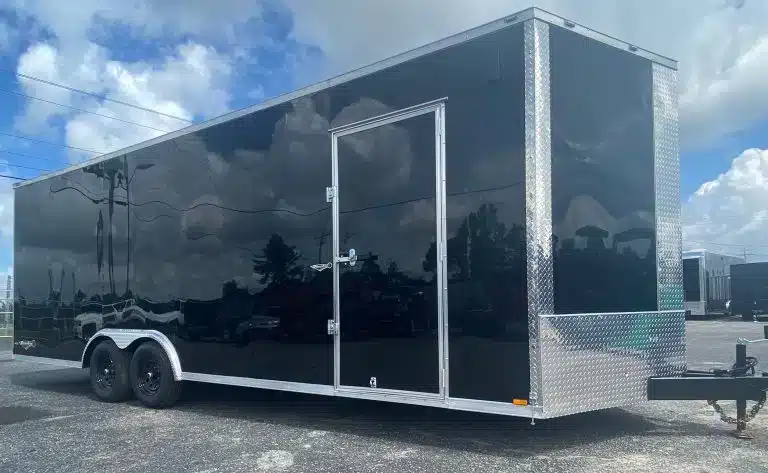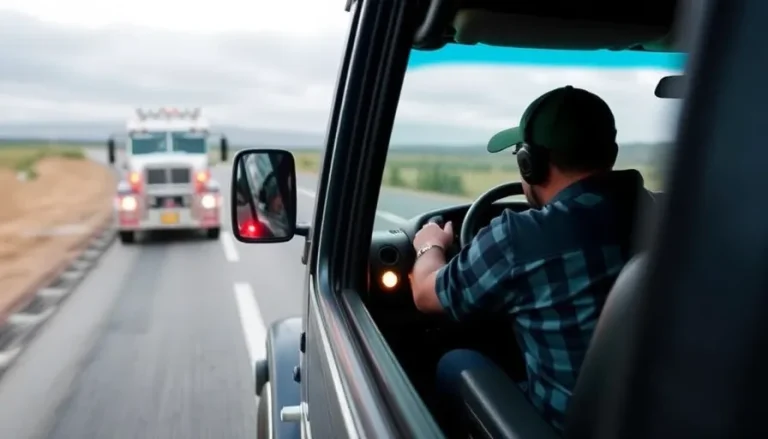


Towing an enclosed trailer with living quarters is not the same as pulling a small utility trailer. Living quarters models are taller and heavier, making them more affected by wind, braking distance, and weight distribution.
If you are buying your first living quarters setup or upgrading to a larger build, learning how to tow and handle it correctly is essential. Safe towing protects your tow vehicle, your trailer, and everyone on the road. It is also a major factor in longevity, as it reduces wear, prevents costly incidents, and makes travel days far less stressful.
Why Towing a Living Quarters Trailer Requires Extra Planning
A living quarters enclosed trailer includes two systems in one unit: a cargo-trailer chassis and a residential-style interior with water, appliances, cabinets, and finishes. That extra weight and complexity mean you need more margin in your towing setup.
Compared with a basic enclosed trailer, you may experience:
- Higher tongue or pin weight requirements
- Longer stopping distances
- More wind influence due to trailer height and side surface area
- Greater consequences from improper loading
If you account for these factors, towing becomes safer and less prone to unpredictable complications.
Choose the Right Tow Vehicle for an Enclosed Trailer with Living Quarters
Before you look at floor plans and finishes, confirm your tow vehicle can handle the trailer. This is one of the most important steps you can take to ensure trailer safety as a buyer.
Understand the Key Ratings
When matching a vehicle to an enclosed trailer, pay attention to:
- Tow rating
- Payload capacity
- Gross combined weight rating
- Axle ratings
- Hitch rating, including weight distribution hitch limits, if applicable
Payload is often the limiting factor in bumper-pull setups because tongue weight, passengers, and gear add up quickly.
Account for Real-World Load
Trailer listings often show a dry or empty weight. Your actual towing weight can be much higher once you add:
- Water in fresh tanks
- Fuel, tools, gear, and personal items
- Food, clothing, and supplies
- Extra batteries or generator options
If you are purchasing an enclosed car trailer with living quarters, the vehicle you are hauling can quickly push you close to limits. Before investing in a unit, estimate the average weight your trailer will be carrying.
Hitch, Brake Controller, and Setup Basics for Trailer Safety
Proper setup is where safe towing starts.
Use the Correct Hitch System
Choose the right hitch type for the size and style of trailer you plan to tow:
- Bumper pull trailers often require a correctly sized receiver and a weight distribution hitch if needed.
- Gooseneck or fifth wheel configurations require properly installed hitch hardware and correct bed clearance.
Set Up Trailer Brakes
A brake controller is not optional for most living quarters trailers. You want smooth braking that does not cause trailer push or lock up.
Before trips, you should:
- Test brake operation at low speed.
- Adjust gain to match your load and road conditions.
- Recheck after loading changes.
Load an Enclosed Car Trailer With Living Quarters for Stable Handling
How you load determines how the trailer behaves. Poor loading can cause sway, reduced steering control, and longer stopping distances.
Follow a Consistent Loading Plan
For an enclosed car trailer with living quarters, aim for:
- Heavy items low and centered over the axles
- Balanced left-to-right weight
- Correct tongue weight or pin weight for your configuration
Avoid placing heavy toolboxes or spare parts too far back in the cargo area, which can increase sway risk.
Secure Cargo To Prevent Shifting
Inside a moving trailer, unsecured items become hazards. If your load shifts, your trailer can handle it differently mid-drive. Use:
- Proper tie downs and rated straps
- E track or D rings correctly installed and not loose
- Cabinet latches that stay shut during travel
Driving Tips To Tow a Living Quarters Enclosed Trailer Confidently
Even with a perfect setup, your driving habits matter.
Manage Speed and Following Distance
A heavier trailer takes longer to stop. Build in extra following distance and avoid last-second braking. Many towing incidents happen because drivers do not leave enough space.
Be Cautious in Wind and Passing Traffic
A tall enclosed trailer with living quarters can be affected by crosswinds and the air push from large trucks. If conditions are strong:
- Reduce speed.
- Increase following distance.
- Keep both hands on the wheel.
- Avoid sudden steering inputs.
Use Gradual Steering and Braking
Smooth inputs keep the trailer stable. Sudden corrections can start to sway or amplify it.
Plan Your Lane Changes Early
Signal early, check mirrors twice, and move over gradually. Your trailer is longer than you think, especially when towing an enclosed car trailer with living quarters that include a longer garage area.
Turning, Cornering, and Backing Up Safely
Wide Turns and Off-Tracking
Trailers track inside the tow vehicle’s path during turns. Take wider turns so you do not clip curbs, posts, fuel station corners, or tight gate entrances.
Backing Basics
Backing a trailer becomes easier when you slow down and break the task into steps:
- Get out and look if you are unsure.
- Use a spotter when possible.
- Make small steering corrections.
- Stop and pull forward to reset rather than forcing a bad angle.
Buyers often underestimate how much easier life is with a rear camera system or a good mirror setup.
Pre-Trip Walk Around Checklist for Every Tow Day
A quick inspection helps prevent roadside problems and improves trailer safety.
Before you leave:
- Check tire pressure on the trailer and tow vehicle.
- Inspect hitch connection, safety chains, and breakaway cable.
- Confirm lights work: running, brake, turn signals.
- Verify brake controller connection and settings.
- Check that doors are latched and compartments are locked.
- Confirm ramps and steps are secured.
- Verify interior items are stowed and cabinets latched.
This routine takes minutes and can prevent major problems.
Buying Tip: Look for Towing-Friendly Design Features
If you are still shopping, consider features that make towing safer and easier:
- Proper axle rating and brake quality
- Good exterior lighting for visibility
- Strong tie-down systems for stable cargo loading
- Layouts that support balanced loading
- Durable doors and seals that stay secure at highway speeds
A well-designed trailer supports safe driving, not just comfort.
Talk to Millennium Trailers About the Right Living Quarters Setup
Towing safely starts with choosing the right trailer and matching it to the right tow vehicle.
If you are comparing an enclosed trailer with living quarters or planning a move into a larger enclosed car trailer with living quarters, visit Millennium Trailers to explore options and get guidance on configurations that fit your hauling requirements.
Contact us today for recommendations or more information about our trailers.