
“Which gooseneck trailer is the best for my application?”
This is one of the most common questions we get from our customers, and the answer is that it always depends. The best gooseneck trailer for a professional car hauler is not the same one that works for a ranch operator, a motorsports team, or a contractor moving heavy equipment across several states.
When searching for used gooseneck trailers, the smartest investment you can make depends on how you match a trailer type to your actual hauling needs. How you handle thorough pre-purchase inspections can help you determine whether a used model is fit for your application.
Why “The Best” Gooseneck Trailer Depends on Your Use Case
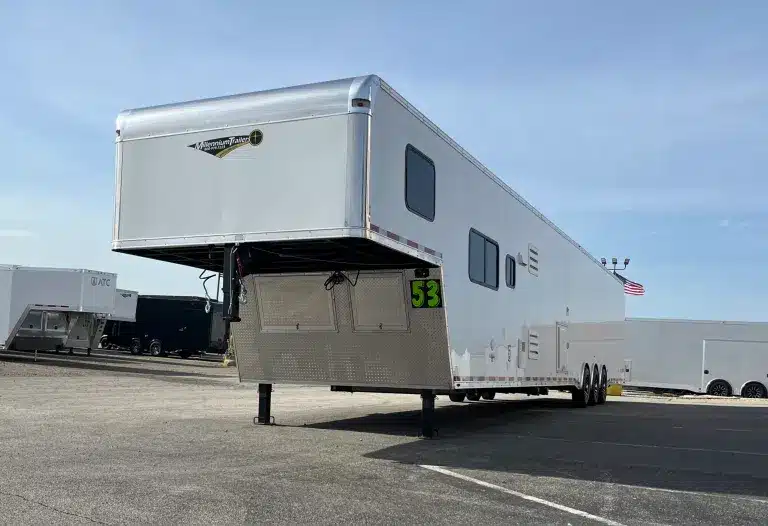
The gooseneck hitch mounts inside the truck bed over the rear axle. This configuration distributes the tongue weight through the truck’s frame, which ensures a more stable connection while moving at highway speeds. It also means higher practical hauling capacity than what bumper-pull setups can provide.
Its structural difference is essential for applications that haul heavy loads or cover long distances. However, this only becomes a benefit when the trailer is matched to what you’re actually pulling. Before you can identify which gooseneck trailer is the best for your needs, determine your use case:
- What is your payload requirement? The trailer’s GVWR and axle ratings must meet or exceed your maximum loaded weight. This includes the cargo and the trailer’s own tare weight.
- What configuration do you need? Open flatbed, enclosed cargo, purpose-built car hauler, and living quarters models each solve a different problem and are not interchangeable.
- What are your dimensional constraints? Interior height, ramp door width, deck length, and overall trailer width affect whether your cargo fits, loads safely, and clears tight job site access.
- What frame material fits your situation? Steel is typically more affordable upfront and easier to repair. Meanwhile, aluminum saves on tare weight and resists long-term corrosion better in wet or coastal environments.
Gooseneck Trailer Types and What Each One Does Best
Match your use case to the right configuration:
| Trailer Type | Best For | Key Features |
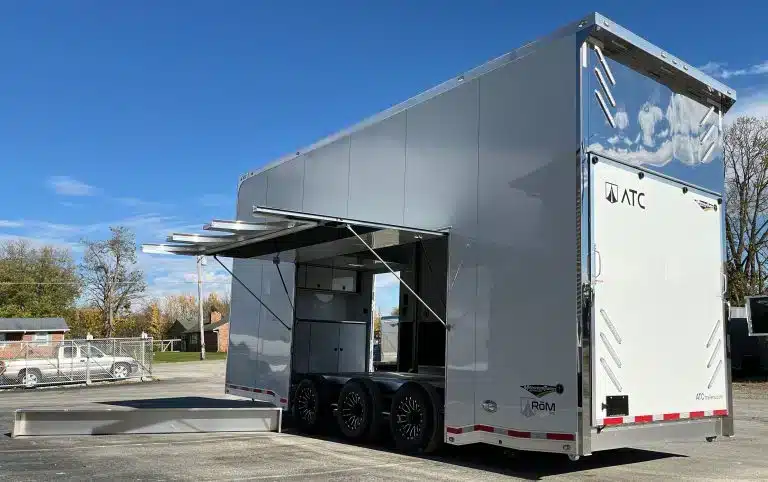
| Enclosed Gooseneck Car Hauler | Racers, collectors, vehicle transport | Interior height, ramp door width, tie-down track system |
| Open Flatbed / Deck-Over | Equipment, ranch, commercial hauling | Axle GVWR, deck surface condition, stake pocket integrity |
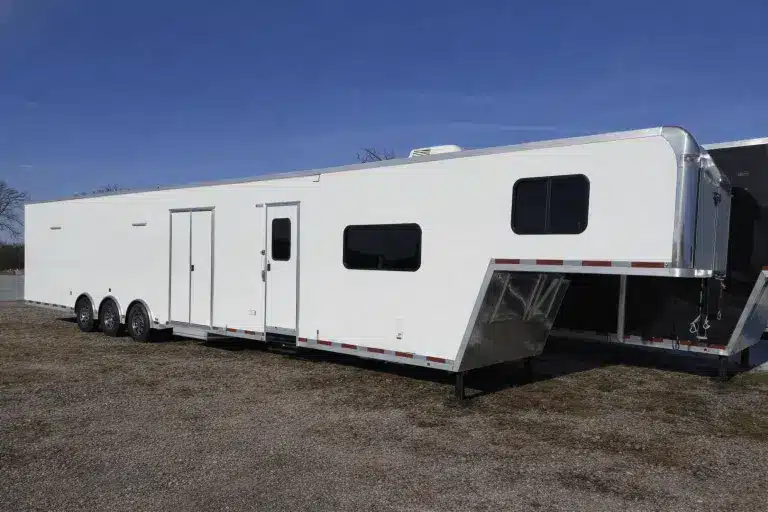
| Gooseneck with Living Quarters | Race teams, long-haul enthusiasts | LQ finish quality, plumbing, generator provisions |
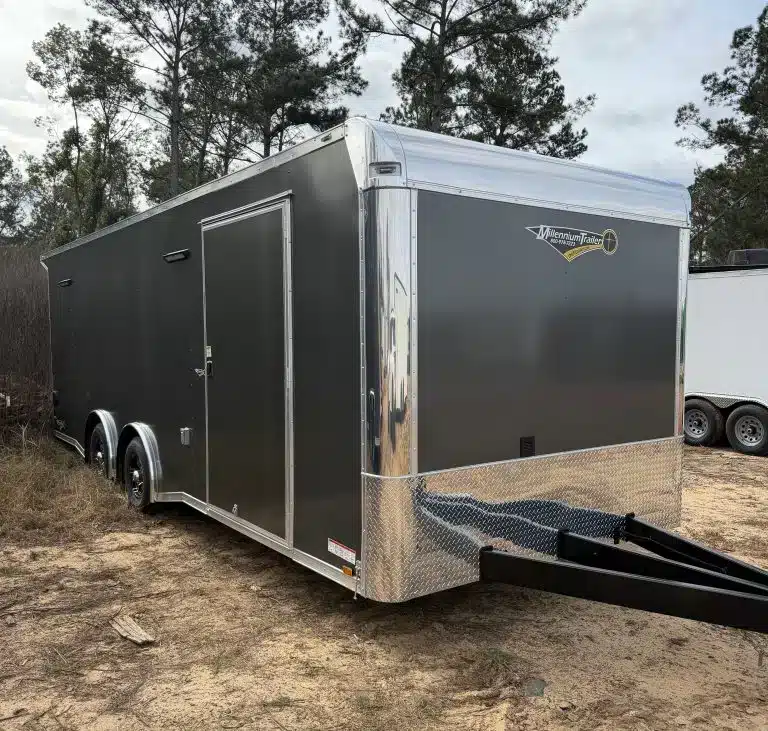
| Used Enclosed Gooseneck | Budget buyers, general cargo | Frame integrity, floor condition, wiring and electrical systems |
Based on your applications:
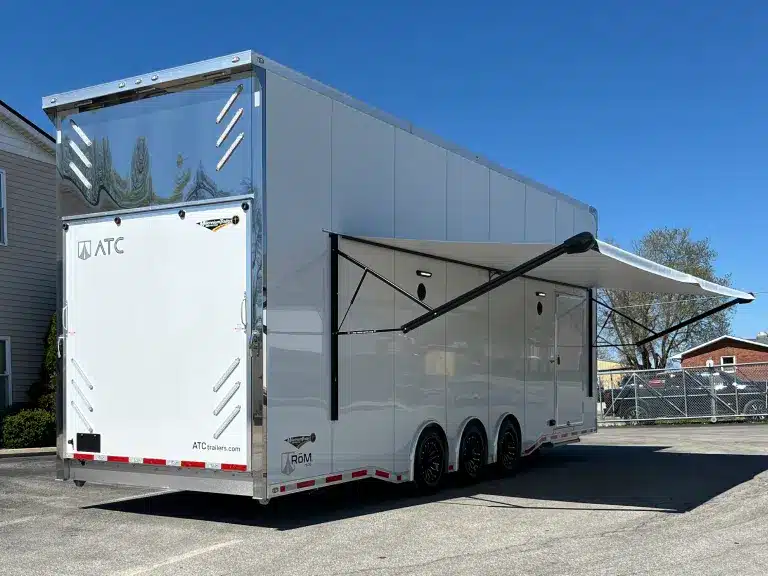
- Transporting Vehicles: Our gooseneck car trailers are built with purpose-engineered loading systems and interior configurations.
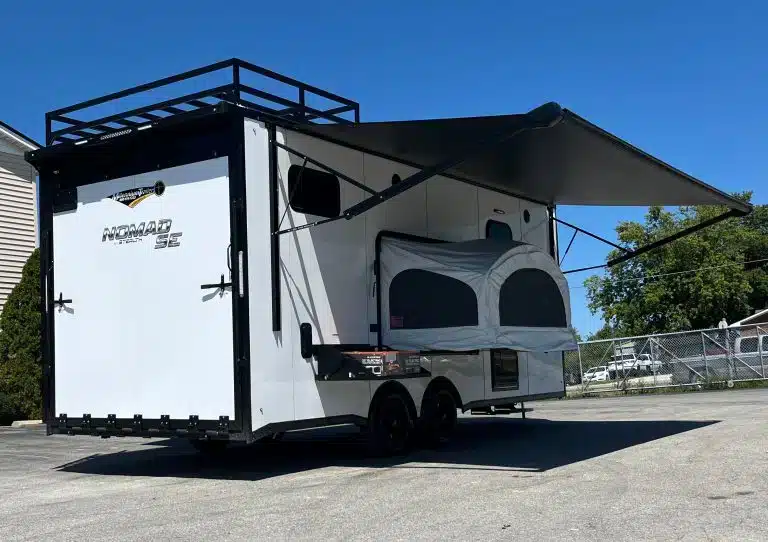
- Versatile Hauler and On-Site Home Base: Gooseneck trailers with living quarters combine both in one unit.
- Best Value: Opt for used gooseneck enclosed trailers and work through the inspection steps to ensure the quality of your purchase.
The Used Gooseneck Trailer Inspection Checklist
This is where buyers either protect their investment or lose money on a trailer that seemed fine at first glance. A complete inspection before purchase takes time, but it reliably surfaces problems that listing photos never show. Work through these five areas in order before agreeing to any price.
1. Frame and Gooseneck Neck
- Stand at the rear and sight down the full length of the frame. It should run straight with no visible twist, bow, or sag.
- Inspect all welds where the neck joins the main frame rails. Look for hairline cracks, uneven bead lines, or fresh paint that may be covering a repaired area.
- Check every crossmember for broken welds, missing sections, or visible cracking along the metal.
- Probe any rust spots with a screwdriver. Surface rust brushes away cleanly; rust that pits or flakes off indicates the underlying structural metal has lost thickness.
2. Axles, Suspension, and Tires
- Pull the manufacturer VIN plate and verify that the axle weight ratings match what the listing claims.
- Inspect each tire for uneven wear patterns. Cupping or wear concentrated on the inner or outer edge indicates a bent spindle, a misaligned axle, or a history of repeatedly overloaded payloads.
- Check leaf springs for cracked or flattened leaves. Push on the equalizer bars — they should have minimal play.
- Rock each wheel firmly side to side and top to bottom. Excess movement points to wheel bearing wear that is close to failure.
3. Brakes and Electrical Systems
- Connect the trailer to your tow vehicle and activate the brake controller. Brakes on each axle should engage and hold without delay.
- Inspect brake drums for deep scoring and check pads for uneven wear or grease contamination from a blown bearing seal. These signs mean replacements are needed before the trailer is road-ready.
- Pull the breakaway switch cable. The brakes should lock immediately. If they don’t, the battery is dead, or the system has a wiring fault.
- Trace the full wiring harness from the front connector to the rear lights. Flag bare wire, electrical tape splice repairs, and any section rerouted away from a heat source after visible chafe damage.
4. Floor, Doors, and Interior
- Walk the full length of the floor pressing firmly with your heel every few feet. A soft or springy spot signals rot or delamination beneath the surface layer.
- Check walls and the ceiling near the nose cone and rear corners for water stains, mold, or mildew.
- Open and close every door fully. Each should latch without force, seal flush with the frame, and show no twist or racking that points to a bent structure.
- For car hauler ramp doors, inspect hinge welds, the latching hardware, and the ramp surface itself for cracks, stress bends, or signs of repeated overloading.
5. Coupler, Jacks, and Safety Chains
- Latch the coupler onto the ball and apply firm upward pressure. Zero play or slop is the standard. Any movement under load means the coupler is worn and needs replacement before the trailer is safe to tow.
- Crank the tongue jack through its full travel in both directions. Smooth, even operation indicates healthy internal gearing. Grinding or binding points to worn components or a bent leg.
- Check each safety chain for a stamped working load limit rating. Chains without a visible, legible rating are not legally compliant in most states.
Red Flags That Should End the Inspection
Some findings are cosmetic and manageable. These are not. Walk away from any used gooseneck trailer that shows:
- A bent, bowed, or twisted main frame
- Cracks at the gooseneck neck-to-frame weld junction
- Missing, damaged, or altered VIN plates
- Flood or water damage anywhere in the electrical system or cargo area
- Severe uneven tire wear across multiple axles at the same time
- Evidence of repeated structural repairs with no documentation explaining them
- No maintenance history on a trailer with clear signs of heavy commercial use
New vs. Used: A Side-by-Side Look
Both can offer great value, though the better option for your application depends on your budget, timeline, and how long you plan to own the trailer.
| New Trailer | Used Trailer | |
| Upfront Cost | Higher | Lower |
| Condition Certainty | Guaranteed | Inspection-dependent |
| Customization Options | Full range available | Limited to existing build |
| Availability | Subject to build lead time | Ready immediately |
| Warranty Coverage | Manufacturer warranty included | Typically not included |
A used trailer offers strong value when it has been consistently maintained and has passed a rigorous inspection. On the other hand, a new trailer is the better call when you need a specific configuration, plan to run it hard for many years, or want more comprehensive warranty coverage.
Find the Right Gooseneck Trailer at Millennium Trailers
Millennium Trailers carries a full range of options designed for different hauling needs and budgets. We have been distributing new and used enclosed trailers nationwide since 1998. Every trailer we carry goes through a quality check before it reaches you. We do not offer units we cannot stand behind, and we won’t recommend a trailer that doesn’t genuinely fit your hauling requirements.
Once you’ve determined which gooseneck trailer is the best for your application, you can use our complete inspection checklist to evaluate any used unit before you buy. You can also reach out to our team for recommendations from our used inventory.
Contact Millennium Trailers online to discuss what you’re hauling, what your tow vehicle is rated for, and how often you’re on the road. We’ll help you find the right new or used trailer that aligns with your plans for the road ahead.