Hauling heavy equipment, several vehicles, or large amounts of material requires a trailer that can handle the load. The weight and size of what you’re carrying affect how the trailer needs to be loaded and how the truck and trailer will handle on the road. For demanding hauling jobs, a heavy-duty gooseneck trailer provides the structural strength and carrying capacity needed to move heavier loads safely.
Before choosing a trailer, it helps to understand how gooseneck towing works and what these trailers are built to handle. Different industries and hauling applications have different requirements, from payload capacity and deck space to axle configurations and trailer features. Below, we cover how gooseneck trailers are designed, where they’re most commonly used, and what to consider when configuring one for your specific needs.
What Makes a Heavy-Duty Gooseneck Trailer Different?
The main difference between a standard bumper pull and a heavy-duty gooseneck trailer is where the trailer connects to the tow vehicle. A bumper pull uses a rear-mounted hitch. This configuration is best suited for lighter loads, typically offering GVWRs between 7,000 and 14,000 pounds. Once you start pushing beyond that range, handling can become a serious concern. Excessive weight on a rear hitch causes dangerous trailer sway. It also lifts the tow vehicle’s front axle, greatly reducing your steering control.
A gooseseck trailer attaches to a hitch ball mounted in the pickup bed, usually over or slightly in front of the rear axle. This connection point shifts how the truck bears the weight, making it ideal for maximum payloads. Depending on the setup, heavy-duty gooseneck trailers offer GVWRs from 14,000 to over 40,000 pounds. The truck’s rear axle and suspension absorb this downward force, helping keep the front wheels firmly planted for better traction and steering control.
The Mechanics of a Heavy Duty 3 Point Gooseneck Hitch
The hitch design is exactly what allows a gooseneck trailer to manage heavy weight. A heavy-duty 3-point gooseneck hitch spreads the towing forces across the truck’s frame instead of stressing a single rear crossmember. This structural advantage gives your rig a highly stable foundation for maximum payloads.
This hitch system typically uses a center ball plate supported by side plates that bolt directly to the frame rails of the tow vehicle. When you load a trailer, the heavy-duty 3-point gooseneck hitch transfers the downward force (tongue weight) and the forward/backward pulling forces evenly.
This mechanical advantage provides several practical benefits:
- Increased Stability: The connection point sits ahead of the rear axle, virtually eliminating the pendulum effect that causes trailer sway at highway speeds.
- Better Weight Distribution: The downward force is shared between the truck’s rear and front axles, keeping the vehicle level and ensuring all four tires maintain optimal contact with the road.
- Tighter Turning Radius: Because the pivot point is in the truck bed, you can achieve a much sharper turning angle, which is necessary when driving through tight job sites or crowded loading docks.
Who Benefits Most from Heavy-Duty Gooseneck Trailers?
Different industries require specific hauling capabilities. Heavy-duty gooseneck trailers are the standard for professionals who regularly move high-capacity loads. If you operate in any of the following sectors, this trailer configuration is likely your most practical option.
Construction and Equipment Hauling
Contractors regularly haul skid steers, mini excavators, and other heavy equipment from one job site to the next. A gooseneck flatbed or equipment trailer provides the deck space and axle capacity needed for machinery weighing 10,000 pounds or more. With the hitch positioned over the truck’s rear axle, the load is easier to manage, giving you better stability when towing tall or top-heavy equipment on the highway.
Agriculture and Ranching
Farmers and ranchers use gooseneck trailers for everything from hauling livestock and tractors to moving feed and other supplies. The gooseneck design also makes it easier to maneuver in tight spaces, whether you’re backing into a barn, working around equipment, or traveling along rough rural roads.
Hotshot Trucking
Hotshot trucking is built around moving time-sensitive freight quickly, often with a one-ton pickup instead of a Class 8 semi-truck. Because your legal payload capacity directly impacts your revenue, choosing the right trailer is necessary. A gooseneck trailer gives hotshot drivers the capacity and stability to haul loads such as industrial equipment, pipe, and palletized freight while traveling between states.
Motorsport and Car Transport
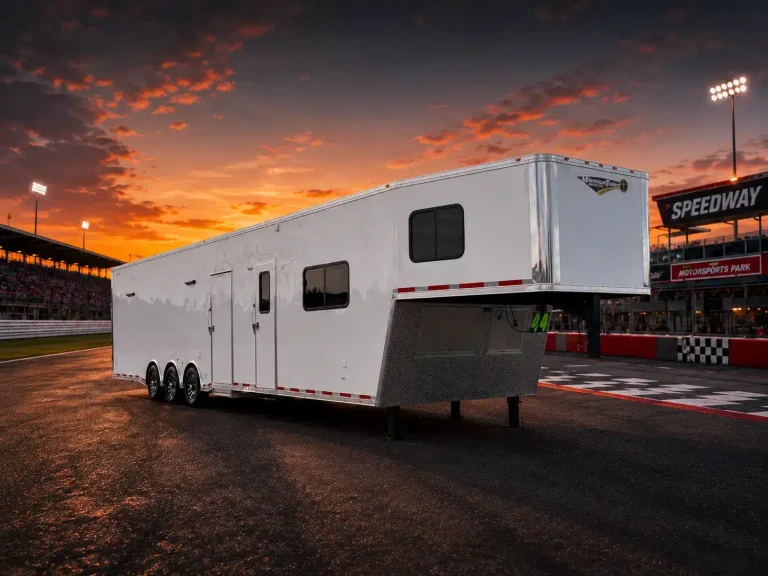
Transporting multiple vehicles or heavy custom cars requires precise weight distribution. From moving classic cars to a show to hauling race cars to the track, gooseneck car trailers provide the deck length and stability needed for multi-vehicle transport. The gooseneck design prevents the rearward sway that often occurs when hauling cars on a standard bumper pull.
Key Features to Look for in a Heavy-Duty Gooseneck Trailer
When evaluating a heavy-duty gooseneck trailer, you must consider the specific features that align with your cargo. The choice between an enclosed trailer and an open-deck trailer will determine how you load, secure, and protect your freight.
Enclosed vs. Open Deck Configurations
- Enclosed Gooseneck Trailers: These provide complete protection from weather and road debris. They are the standard for transporting high-value cargo, race cars, or sensitive equipment. Enclosed models also allow you to build out the interior with custom cabinets, workbenches, and lighting.
- Open Deck Gooseneck Trailers: These are designed for raw utility. They allow for side-loading with forklifts and can accommodate oversized equipment that would not fit through the rear door of an enclosed trailer.
Specialized Applications
Some hauling jobs call for a trailer designed around the type of material being moved. Heavy-duty gooseneck dump trailers are built for transporting loads such as aggregate, soil, gravel, and construction debris. The gooseneck hitch provides the capacity and stability needed for heavy loads, while the hydraulic dump system makes it easier to unload large quantities of material at the job site.
Trailer Type Comparison
| Trailer Type | Best Used For | Key Advantage |
| Enclosed Gooseneck | High-value vehicles, sensitive freight, mobile workspaces | Weather protection, security, and interior customization |
| Open Flatbed Gooseneck | Heavy machinery, oversized loads, palletized freight | Easy side-loading, maximum raw payload capacity |
| Gooseneck Dump Trailer | Aggregate, construction debris, landscaping materials | Hydraulic unloading, high-volume material transport |
Customizing Your Heavy Duty Gooseneck Trailer
Purchasing a trailer off the lot often means compromising on features. To get the most out of your investment, customizing your heavy-duty gooseneck trailer ensures it meets your exact operational requirements.
Building a custom trailer lets you dictate the exact specifications rather than settling for a standard model’s limitations. That includes selecting the right axle capacity and GVWR for your loads, along with the trailer length and interior height needed for your cargo and equipment.
There’s more to customizing a trailer than choosing its length and weight rating. Depending on how you’ll use it, you can add reinforced flooring for heavy equipment, E-track for adjustable tie-down points, or additional electrical capacity for lights, outlets, and tools. For longer trips to racing events or extended hauling jobs, gooseneck trailers with living quarters can also be built with sleeping areas, bathrooms, kitchenettes, and other comforts for time spent on the road.
Why Choose Millennium for Your Next Heavy Duty Gooseneck Trailer?
Selecting the right manufacturer and dealer matters just as much as selecting the right trailer type. At Millennium Trailers, we focus on structural quality, transparent pricing, and a streamlined custom build process.
When you work with us, you receive line-item pricing. There are no hidden fees or vague estimates; you see exactly what each component and customization costs. This transparency allows you to build a trailer that fits both your hauling requirements and your budget.
Every hauling operation has its own requirements. If you’re looking for a fully customized enclosed car hauler or adding reliable used gooseneck enclosed trailers to your fleet, we can help you find a setup built around your needs. Our team can help you choose the right specifications, features, and construction for heavy-duty transport.
Frequently Asked Questions
What truck size do I need to pull a heavy-duty gooseneck trailer?
A 3/4-ton (2500 series) or 1-ton (3500 series) pickup is typically needed for a heavy-duty gooseneck trailer. The right choice depends on the loaded trailer weight and the amount of cargo you’re hauling. Before towing, check your truck’s towing capacity and payload rating to make sure it can handle the load.
Do I need a Commercial Driver’s License (CDL) to tow a gooseneck trailer?
CDL requirements depend on the weight ratings of your truck and trailer. A Class A CDL is generally required when the combination’s GCWR exceeds 26,000 pounds, and the trailer has a GVWR over 10,000 pounds. Since many heavy-duty gooseneck setups fall within these ranges, check your specific weight ratings and state requirements before towing.
How do I maintain a gooseneck hitch?
To prevent metal-on-metal wear, wipe down the hitch ball and trailer coupler and apply a light coat of grease. You also need to check the mounting bolts on your heavy-duty 3-point gooseneck hitch periodically, making sure they stay torqued to the manufacturer’s exact specifications.
Get Expert Guidance on Your Next Trailer
Transporting heavy loads requires equipment built for the task. A heavy-duty gooseneck trailer provides the secure payload capacity you need to move your cargo without delay. At Millennium Trailers, we help you review specifications, capacities, and custom options to build the exact unit for your application.
Call us at 800-978-7223, request a quote online, or use our “Design Your Own Trailer” tool to start configuring your custom build today.
11.25